Sign up for SEDS-ÉEDS Canada’s monthly newsletter to get updates on events (including conferences, hackathons, and design team competitions), opportunities in Canada’s space industry, and volunteer positions open at SEDS-ÉEDS Canada. You can unsubscribe at any time.
University: Concordia University & Queen’s University
Team CRISiS (Cardiovascular Resuscitation Identification Simulator in Space) from Concordia University aims to engineer a new class of cardio-pulmonary resuscitation (CPR) manikins as a testing platform to provide real-time feedback of volumetric flow rate within a cardiovascular fluidic system. This project is a stepping-stone in establishing a “gold standard” CPR for human spaceflight.
Patrick Hill
Postdoctoral Fellow
University of Alberta
I am a postdoctoral research fellow at the University of Alberta advancing curation methods for planetary materials by investigating best practices in preserving samples returned from future space missions through simulations of returned sample curation and analysis. My Ph.D. dissertation focused on stable isotope ratios of oxygen and silicon isotopes in lunar material. I love all things planetary science, especially the Moon.
Kate Howells
Communications Strategy & Canadian Space Policy Adviser
The Planetary Society
In her role as Communications Strategist, Kate works to engage The Planetary Society’s myriad audiences in the adventure of space exploration. Kate provides tools, training, and other resources to help ordinary people share space with their communities, and connects Planetary Society members with opportunities to get involved in advancing exploration. She also writes for The Planetary Report and planetary.org on a variety of space and outreach topics.
As a Space Policy Adviser, Kate guides The Planetary Society’s positions on space policy and advocacy in Canada and connects Canadian Planetary Society members with opportunities to advocate for Canadian space science and exploration programs.
Kate also serves on the Government of Canada’s Space Advisory Board and is a trusted media source for expertise and analysis of Canadian space policy. This is also the author of Space Is Cool As F***, a science columnist for The Editorial Magazine, and creator, writer, and producer of the digital series Whoa.
Wilfred Buck
Science Facilitator and Star Lore Expert
Manitoba First Nations Education Resource Centre
Wilfred Buck is a science facilitator and Indiginours star lore expert with the Manitoba First Nations Education Resource Center. He is a member of the
Opaskwayak Cree Nation, within which he is known for his knowledge of First Nations astronomy. Through his research, Wilfred has compiled astronomical knowledge of the Cree, Ojibway and Lakota peoples. Wilfred is the co-curator of the ‘One Sky, Many Astronomies exhibit in Canada’s Science and Technology Museum, which features constellations of Canada’s indigenous cultures. He has also served as a storyteller in the short film “Legends of the Night Sky’ which is shown in the planetarium of the Telus World of Science in Edmonton.
Coming Soon!
Not long until a connection is made!
Person Bio
blarg (can have this say whatever you want, e.g. their bio, and can also add a picture, etc.)
You can also customize what the popup looks like, this is a preset
Orbital debris poses an increasing risk to operational satellites as more objects are launched into space each year. The slow decay of currently orbiting objects compared to the rate at which new ones are being launched means that the active removal of high-collision risk debris will be essential to maintaining a safe and operational future Lower Earth Orbit (LEO). Our company looks to capitalize on this emerging market through removing high-risk LEO debris either on the behalf of governments or private entities who are not capable of deorbiting their spacecraft at the end of its mission life.
Elementary, middle and high school students are losing interest in STEM and most notably space sciences as they progress through their education. This leads to students graduating from high school with no particular interest in pursuing careers in the space industry. This will no doubt hurt the space industry in the many years to come. Our products and services will add hands-on exciting and rewarding space sciences/engineering projects to students education. These projects will reignite the passion many students have for space and increase the number of students wishing to target the space industry when pursuing their careers. This will also have the positive effect of leading more students into STEM fields.
Apastron technologies will change the way spacecraft communicate by introducing a simple and reliable communications platform that provides 24/7 satellite connectivity with low infrastructure costs. Historically, satellites communicate with the ground using a link between one satellite and a ground station, meaning that communication can only be established for a few minutes per day. Apastron’s radios will network with each other, allowing for satellites around the world to talk with each other and relay data to a small number of ground stations, ensuring that a satellite anywhere in the world has constant communication. Furthermore, since Apastron radios rely on fewer ground stations and no dedicated satellites, constant communication can be accomplished for much cheaper than current solutions. As the nanosatellite industry continues to grow and missions become more ambitious, a better communications solution is needed, and Apastron aims to provide that.
Sobia Nadeem
President
McMaster Planetary Society
Sobia Nadeem is a second year Engineering Physics student at McMaster University. She is the President of the McMaster Planetary Society and in November of 2019, her team organized McMaster’s first Space Week. There were several events hosted by other McMaster space teams and clubs during the week, with the McMaster Planetary Society’s Space Industry Night being a highlight. Sobia is passionate about space outreach as well as art. She was a former youth poet for the Hamilton Youth Poets, as well as a former artist for McMaster Unspoken, a poetry initiative on campus. She is excited to co-host the Ascension Space Conference at McMaster University this year!
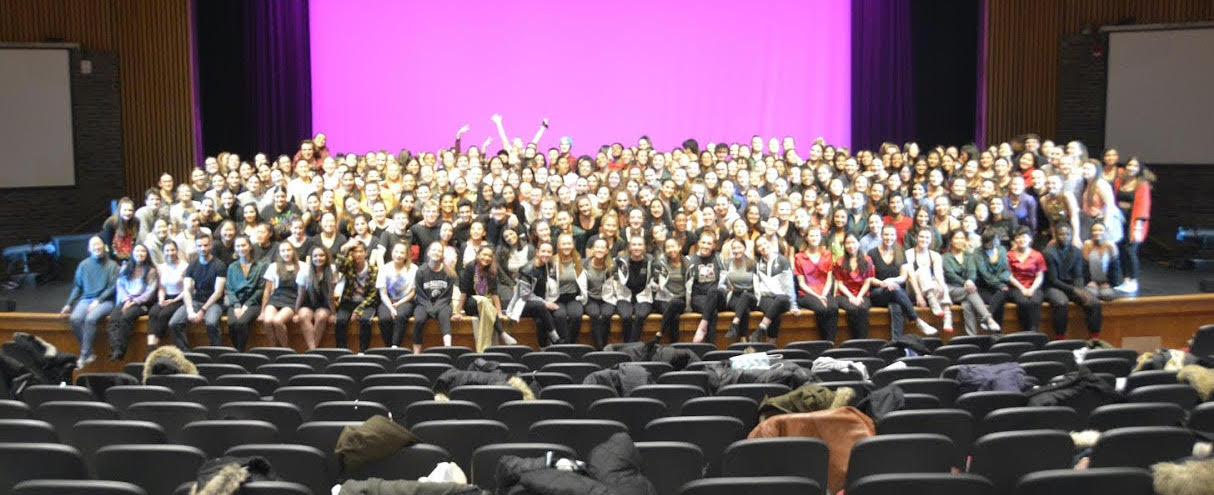
Mac Dance
MAC Dance is an amalgamation of several established McMaster dance organizations representing a team of dancers of all levels, including recreational and competitive teams. All styles are encouraged and welcomed, for individuals interested in a just-for-fun recreational experience. The recreational team’s focus is on an annual dance show, which is completely organized and choreographed by club members consisting of McMaster students.
Bhairavi Shankar
Founder/CEO
Indus Space
Bhairavi is a Planetary Scientist and founder/CEO of Indus Space. Through her company, she actively focuses on public education in space science working with school-aged students. She also helps to connect the public with space-themed resources, assisting with curriculum development. She loves to promote about space science and the role of women in science as often as possible.
Tanya Harrison
Manager of Science Programs at Planet,
Founder Professional Martian LLC
Dr. Tanya Harrison calls herself a “professional martian.” She has spent the last decade working as a scientist and in mission operations on multiple NASA Mars missions, including the Curiosity and Opportunity rovers. Her specialty lies in geomorphology: the study of a planet’s evolution based on its surface features. Before Mars however, Tanya had her head in the stars as an astronomer studying the metal content of star clusters and recurring novae systems. She holds a Ph.D. in Geology from the University of Western Ontario, a Masters in Earth and Environmental Sciences from Wesleyan University, and a B.Sc. in Astronomy and Physics from the University of Washington. Currently she is the Manager of Science Programs at Planet Federal, the federal arm of Planet Labs. Tanya is also an advocate for advancing the status of women in science and for accessibility in the geosciences. You can find her prolifically tweeting about the Red Planet as @tanyaofmars.