French version follows // la version française suit. Four teams selected for CAN-RGX 2023-24 Students for the Exploration and Development of Space (SEDS-Canada) has selected the four teams among a pool of applications for the 2023-24 Canadian Reduced Gravity Experiment Design Challenge (CAN-RGX). The competition challenged post-secondary students attending Canadian universities and colleges to submit
French version follows // la version française suit. Canadian University Students to Test Their Experiment onboard Stratospheric Balloons The Canadian Stratospheric Balloon Experiment (CAN-SBX) Design Challenge is set to demonstrate the innovative minds of Canada’s post secondary students once again as a Canadian university team prepares to showcase their experiment in the upcoming CAN-SBXV mission.
French version follows // la version française suit. Canadian University Students Set to Fly Their Experiments in Microgravity This Month Four university teams are set to compete this month with their out-of-this-world experiments, as part of the Canadian Reduced Gravity Experiment (CAN-RGX) Design Challenge. CAN-RGX encourages post-secondary students from across Canada to fully design, build,
French version follows // la version française suit. Two teams selected for CAN-SBX 2022-23 Students for the Exploration and Development of Space (SEDS-Canada) has selected two teams for the 2022-23 Canadian Stratospheric Balloon Experiment Design Challenge (CAN-SBX). The competition challenged post-secondary students attending Canadian universities to submit a proposal for a small scientific payload to
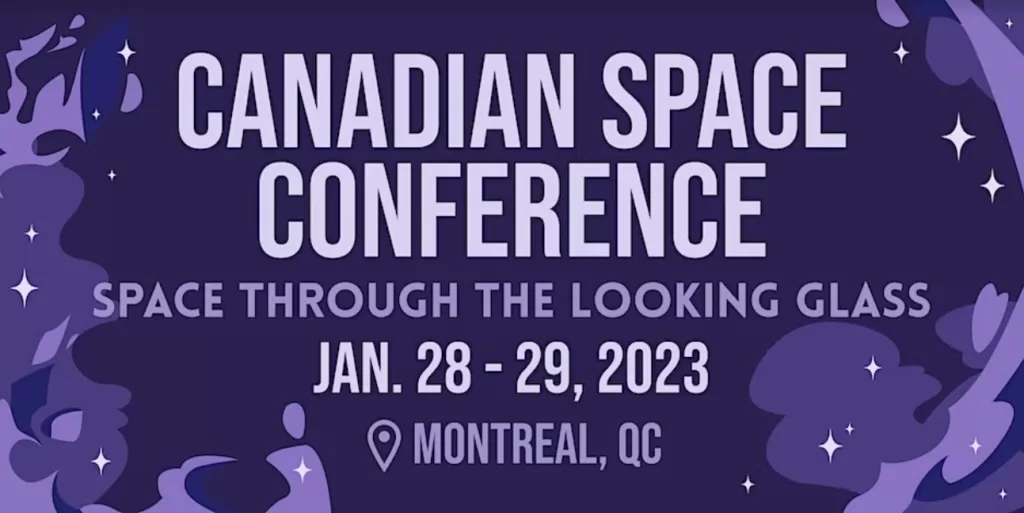
Are you a student or professional looking to delve into the exciting world of space innovation and discovery? Look no further than the Canadian Space Conference, which is back and better than ever in 2023, with an exciting lineup of speakers, workshops, and networking opportunities for students, researchers, and industry professionals alike. This year’s theme,
French version follows // la version française suit. Four teams selected for CAN-RGX 2022-23 Students for the Exploration and Development of Space (SEDS-Canada) has selected the four teams among a pool of applications for the 2022-23 Canadian Reduced Gravity Experiment Design Challenge (CAN-RGX). The competition challenged post-secondary students attending Canadian universities and colleges to submit
French version follows // la version française suit. Canadian University Students Set to Fly Their Experiments on a Stratospheric Balloon Next Week Two university teams are set to fly their out-of-this-world experiments next week, as part of the Canadian Stratospheric Balloon Experiment (CAN-SBX) Design Challenge. CAN-SBX encourages post-secondary students from across Canada to fully design,
French version follows // la version française suit. Three teams selected for CAN-SBX 2021-22 Students for the Exploration and Development of Space (SEDS-Canada) has selected the three teams among a pool of applications for the 2021-22 Canadian Stratospheric Balloon Experiment Design Challenge (CAN-SBX). The competition challenged post-secondary students attending Canadian universities and colleges to submit
French version follows // la version française suit. Four teams selected for CAN-RGX 2021-22 Students for the Exploration and Development of Space (SEDS-Canada) has selected the four teams among a pool of applications for the 2021-22 Canadian Reduced Gravity Experiment Design Challenge (CAN-RGX). The competition challenged post-secondary students attending Canadian universities and colleges to submit
It’s our favourite time of the year! To kickoff the new school year, we are proud to announce our projects and events for 2021 – 2022! At SEDS-Canada we are committed to providing experiential learning, non-formal education, & professional development opportunities to all students interested in space. Stay tuned for live Q&A sessions from our
French version follows // la version française suit. Canadian University Students Set to Fly Their Experiments in Microgravity This Week Six university teams are set to compete next week with their out-of-this-world experiments, as part of the Canadian Reduced Gravity Experiment (CAN-RGX) Design Challenge. CAN-RGX encourages post-secondary students from across Canada to fully design, build,
SEDS-ÉEDS (SEDS-Canada) has partnered with Western University’s Institute for Earth and Space Exploration for the Canadian Arctic Research Expedition (CAN-ARX) challenge Toronto, ON: Students for the Exploration and Development of Space (SEDS-Canada) and Western University’s Institute for Earth and Space Exploration have formed a partnership to launch a new competition for post-secondary students in Canada,
SEDS-Canada and Zenith Canada Pathways have partnered together to provide more opportunities to early career professionals and sustain highly-qualified students in Canada’s space industry. Through Zenith, young professionals have the opportunity to participate in a bespoke mentorship and professional training program. The Zenith Canada Pathways Foundation is currently seeking prospective host organizations and strategic partners interested in engaging
Introducing Reach for the Moon! A new contest from SEDS-Canada in partnership with SEDS-India and Mission Control Space Services. Participants will submit a 1 minute video demonstrating why they are interested in space exploration and what experiment they would conduct on the moon! The top 3 students from each country will get to remotely drive
Six teams successfully complete SEDS-Canada’s 2021 Young Space Entrepreneurs (YSpacE) competition. Toronto, ON: Six student teams made up of students from across Canada have completed the Young Space Entrepreneurs (YSpacE) Competition, hosted by the Students for the Exploration and Development of Space (SEDS-Canada). YSpacE is Canada’s only business plan competition for students with a focus
French version follows // la version française suit. SEDS-ÉEDS (SEDS-Canada), the National Research Council of Canada (NRC), and the Canadian Space Agency (CSA) select a team for CAN-RGX 2021 Students for the Exploration and Development of Space (SEDS-Canada) has selected one finalist team for the 2020-21 Canadian Reduced Gravity Experiment (CAN-RGX) Design Challenge. CAN-RGX is
SEDS-Canada’s Young Space Entrepreneurs (YSpacE) competition kicks off, with participants from across Canada. Toronto, ON: Students for the Exploration and Development of Space (SEDS-Canada) has selected twenty students to participate in the 2020-21 Young Space Entrepreneurs (YSpacE) competition. YSpacE is Canada’s only business plan competition with a focus on the space sector. SEDS-Canada aims to
French version follows // la version française suit. SEDS-ÉEDS (SEDS-Canada) and the Canadian Space Agency (CSA) select two teams for CAN-SBX 2021 Toronto, ON: Students for the Exploration and Development of Space (SEDS-Canada) has selected two finalist teams for the 2020-21 Canadian Stratospheric Balloon Experiment (CAN-SBX) Design Challenge. CAN-SBX is a competition for Canadian post-secondary
It’s the most wonderful time of the year! The holiday season is right around the corner and with that comes the all new Crowdfunding Campaign SEDS-Canada’s Season of Giving. Starting November 30th, stay tuned on our Twitter, Instagram, and Facebook for a week full of events. There will be special live events, interviews, fun activities,
The World Space Week (a.k.a. the best week of the year) is here! This year’s theme is “Satellites Improve Life” and our staff and directors have been busy organizing events throughout the week to highlight the Canadian space industry and student opportunities in the space sector. October 5th, 2020: Live With SEDS-Canada Today is your
It’s our favourite time of the year! With the new school year comes the announcement of our 2020-21 projects and events, and this year we have quite the lineup. If you have any questions about these activities, please contact projects@seds.ca. Click the poster images for more information about each individual project or event Canada’s first
Name: Chimira AndresPosition: VP Finance School: Western UniversityWorking with SEDS-Canada since: December 2019 Why did you join SEDS-Canada? I joined SEDS-Canada to be more involved in the representation of students interested in space with the hopes of learning and contributing to the growth/improvement of our Canadian space ecosystem. Because sometimes, you gotta be the change, you want to see in
Name: Slater Covenden Position: Director at Large School: Concordia University Working with SEDS-Canada since: July 2019 Why did you join SEDS-Canada? I wanted to understand the space industry better, both nationally and internationally. Tell us about a contribution you made to SEDS-Canada that you are proud of. I applied for a large grant from the Canadian
We’re featuring our Staff, Directors, and Friends of SEDS over the next couple months so you can learn more about SEDS-Canada and the people who drive it. Here’s our first feature: Name: Lelna Gwet Position: VP Internal School: McMaster University Working with SEDS-Canada since: May 2019 Why did you join SEDS-Canada? I’ve always been a
Meet your selected CAN-RGX 2020 teams! uO Rocketry, University of Ottawa Does our medicine work in space? What will astronauts do if they get sick on their way to the Moon or Mars? Partnering with McMaster University’s Brown Lab, uORocketry’s CAN-RGX’s team is poised to discover whether our last line of defence antibiotics will be
Meet your selected CAN-SBX 2020 teams: NEUDOSE-HAB, McMaster University On Earth, our atmosphere shields us from the harmful radation of space. However, as we send astronauts further and further into space, and for longer periods of time, they are being exposed to large amounts of radiation. These high amounts of radiation can severely increase chances
It’s our favourite time of the year! With the new school year comes the announcement of our 2019-2020 projects and events, and this year we have quite the lineup. If you have any questions about our 2019-2020 projects, contact projects@seds.ca. If you have questions about out 2019-2020 events, shoot an email to events@seds.ca. Click the
We received quite a handful of applications from all over Canada for the 2019 Canadian Lunar Analogue Experience (CAN-LAX). After interviewing top candidates, we’re delighted to introduce you to our selected participants. These students will partake in online training prior to being flown to Western University to participate in the #CanMoon mission. Follow their journey’s
SEDS-Canada has selected the winning team for the 2018-2019 YSpacE competition! YSpacE is Canada’s only business plan competition with a focus on the space sector. SEDS-Canada aims to empower students with the experience and confidence to target problems in the space sector, develop solutions, and turn them into profitable ideas. YSpacE accomplishes this by providing
Meet your selected CAN-SBX 2019 teams: WesternU HAB, Western University/Centre for Planetary Sciences and Exploration (CPSX) The WesternU HAB Team will attempt to obtain bioaerosols and moisture samples vertically throughout Earth’s atmosphere. This will be achieved through specialized high altitude sampling chamber(s). Microbial aerosol characterization will be completed primarily via optical microscopy. The air
SEDS-Canada is an official partner of Space Matters, an initiative created to make Canadians aware of the importance of space. The goal of Space Matters is to emphasize how Canadian’s daily lives are impacted by space and spark a generation of future STEM scientists in the space industry through educational outreach. Space Matters is a community
The #DontLetGoCanada organization has been working vigorously to help secure Canada’s place in space. Recently, the #DontLetGoCanada coalition wrote an Open Letter to Prime Minister Justin Trudeau, the Minister of Finance Bill Morneau, and the Minister of Innovation, Science and Economic Development (ISED) Minister Navdeep Bains. The letter was signed by SEDS-Canada’s president, Roxy Fornier,
SEDS-Canada is pleased to announce the Telus World of Science – Edmonton as a venue sponsor for the Ascension 2019 conference! Join us on Friday March 1st at the newly renovated Telus World of Science – Edmonton, where you can tour the brand new S.P.A.C.E gallery, enjoy a laser light show in the Zeidler Dome (the
Students for the Exploration and Development of Space (SEDS-Canada) has selected the four finalist teams among a pool of applications for the 2019 Canadian Reduced Gravity Experiment Design Challenge (CAN-RGX). The competition challenged post-secondary students attending Canadian universities and colleges to submit a proposal for a small scientific payload to be tested onboard the National Research Council
Join the movement! #DontLetGoCanada #DontLetGoCanada is a movement created by 18 Canadian organizations to emphasize the importance of Canada’s presence in the space sector. The goals of the coalition movement is make the Canadian government aware of the importance of funding Canadian space initiatives and make the general public more aware of the exciting opportunities
University: Concordia University & Queen’s University
Team CRISiS (Cardiovascular Resuscitation Identification Simulator in Space) from Concordia University aims to engineer a new class of cardio-pulmonary resuscitation (CPR) manikins as a testing platform to provide real-time feedback of volumetric flow rate within a cardiovascular fluidic system. This project is a stepping-stone in establishing a “gold standard” CPR for human spaceflight.
Patrick Hill
Postdoctoral Fellow
University of Alberta
I am a postdoctoral research fellow at the University of Alberta advancing curation methods for planetary materials by investigating best practices in preserving samples returned from future space missions through simulations of returned sample curation and analysis. My Ph.D. dissertation focused on stable isotope ratios of oxygen and silicon isotopes in lunar material. I love all things planetary science, especially the Moon.
Kate Howells
Communications Strategy & Canadian Space Policy Adviser
The Planetary Society
In her role as Communications Strategist, Kate works to engage The Planetary Society’s myriad audiences in the adventure of space exploration. Kate provides tools, training, and other resources to help ordinary people share space with their communities, and connects Planetary Society members with opportunities to get involved in advancing exploration. She also writes for The Planetary Report and planetary.org on a variety of space and outreach topics.
As a Space Policy Adviser, Kate guides The Planetary Society’s positions on space policy and advocacy in Canada and connects Canadian Planetary Society members with opportunities to advocate for Canadian space science and exploration programs.
Kate also serves on the Government of Canada’s Space Advisory Board and is a trusted media source for expertise and analysis of Canadian space policy. This is also the author of Space Is Cool As F***, a science columnist for The Editorial Magazine, and creator, writer, and producer of the digital series Whoa.
Wilfred Buck
Science Facilitator and Star Lore Expert
Manitoba First Nations Education Resource Centre
Wilfred Buck is a science facilitator and Indiginours star lore expert with the Manitoba First Nations Education Resource Center. He is a member of the
Opaskwayak Cree Nation, within which he is known for his knowledge of First Nations astronomy. Through his research, Wilfred has compiled astronomical knowledge of the Cree, Ojibway and Lakota peoples. Wilfred is the co-curator of the ‘One Sky, Many Astronomies exhibit in Canada’s Science and Technology Museum, which features constellations of Canada’s indigenous cultures. He has also served as a storyteller in the short film “Legends of the Night Sky’ which is shown in the planetarium of the Telus World of Science in Edmonton.
Coming Soon!
Not long until a connection is made!
Person Bio
blarg (can have this say whatever you want, e.g. their bio, and can also add a picture, etc.)
You can also customize what the popup looks like, this is a preset
Orbital debris poses an increasing risk to operational satellites as more objects are launched into space each year. The slow decay of currently orbiting objects compared to the rate at which new ones are being launched means that the active removal of high-collision risk debris will be essential to maintaining a safe and operational future Lower Earth Orbit (LEO). Our company looks to capitalize on this emerging market through removing high-risk LEO debris either on the behalf of governments or private entities who are not capable of deorbiting their spacecraft at the end of its mission life.
Elementary, middle and high school students are losing interest in STEM and most notably space sciences as they progress through their education. This leads to students graduating from high school with no particular interest in pursuing careers in the space industry. This will no doubt hurt the space industry in the many years to come. Our products and services will add hands-on exciting and rewarding space sciences/engineering projects to students education. These projects will reignite the passion many students have for space and increase the number of students wishing to target the space industry when pursuing their careers. This will also have the positive effect of leading more students into STEM fields.
Apastron technologies will change the way spacecraft communicate by introducing a simple and reliable communications platform that provides 24/7 satellite connectivity with low infrastructure costs. Historically, satellites communicate with the ground using a link between one satellite and a ground station, meaning that communication can only be established for a few minutes per day. Apastron’s radios will network with each other, allowing for satellites around the world to talk with each other and relay data to a small number of ground stations, ensuring that a satellite anywhere in the world has constant communication. Furthermore, since Apastron radios rely on fewer ground stations and no dedicated satellites, constant communication can be accomplished for much cheaper than current solutions. As the nanosatellite industry continues to grow and missions become more ambitious, a better communications solution is needed, and Apastron aims to provide that.
Sobia Nadeem
President
McMaster Planetary Society
Sobia Nadeem is a second year Engineering Physics student at McMaster University. She is the President of the McMaster Planetary Society and in November of 2019, her team organized McMaster’s first Space Week. There were several events hosted by other McMaster space teams and clubs during the week, with the McMaster Planetary Society’s Space Industry Night being a highlight. Sobia is passionate about space outreach as well as art. She was a former youth poet for the Hamilton Youth Poets, as well as a former artist for McMaster Unspoken, a poetry initiative on campus. She is excited to co-host the Ascension Space Conference at McMaster University this year!
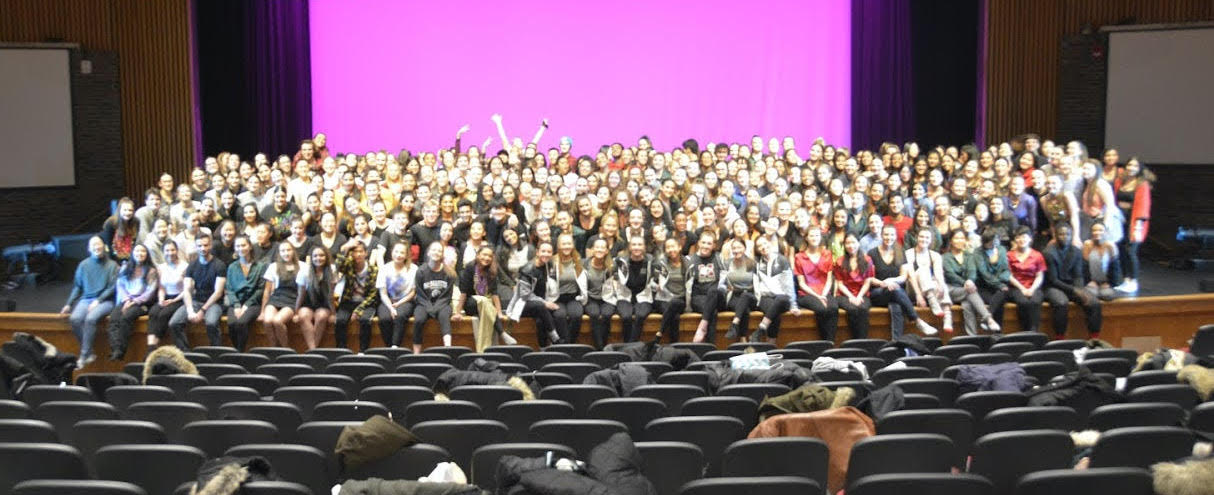
Mac Dance
MAC Dance is an amalgamation of several established McMaster dance organizations representing a team of dancers of all levels, including recreational and competitive teams. All styles are encouraged and welcomed, for individuals interested in a just-for-fun recreational experience. The recreational team’s focus is on an annual dance show, which is completely organized and choreographed by club members consisting of McMaster students.
Bhairavi Shankar
Founder/CEO
Indus Space
Bhairavi is a Planetary Scientist and founder/CEO of Indus Space. Through her company, she actively focuses on public education in space science working with school-aged students. She also helps to connect the public with space-themed resources, assisting with curriculum development. She loves to promote about space science and the role of women in science as often as possible.
Tanya Harrison
Manager of Science Programs at Planet,
Founder Professional Martian LLC
Dr. Tanya Harrison calls herself a “professional martian.” She has spent the last decade working as a scientist and in mission operations on multiple NASA Mars missions, including the Curiosity and Opportunity rovers. Her specialty lies in geomorphology: the study of a planet’s evolution based on its surface features. Before Mars however, Tanya had her head in the stars as an astronomer studying the metal content of star clusters and recurring novae systems. She holds a Ph.D. in Geology from the University of Western Ontario, a Masters in Earth and Environmental Sciences from Wesleyan University, and a B.Sc. in Astronomy and Physics from the University of Washington. Currently she is the Manager of Science Programs at Planet Federal, the federal arm of Planet Labs. Tanya is also an advocate for advancing the status of women in science and for accessibility in the geosciences. You can find her prolifically tweeting about the Red Planet as @tanyaofmars.